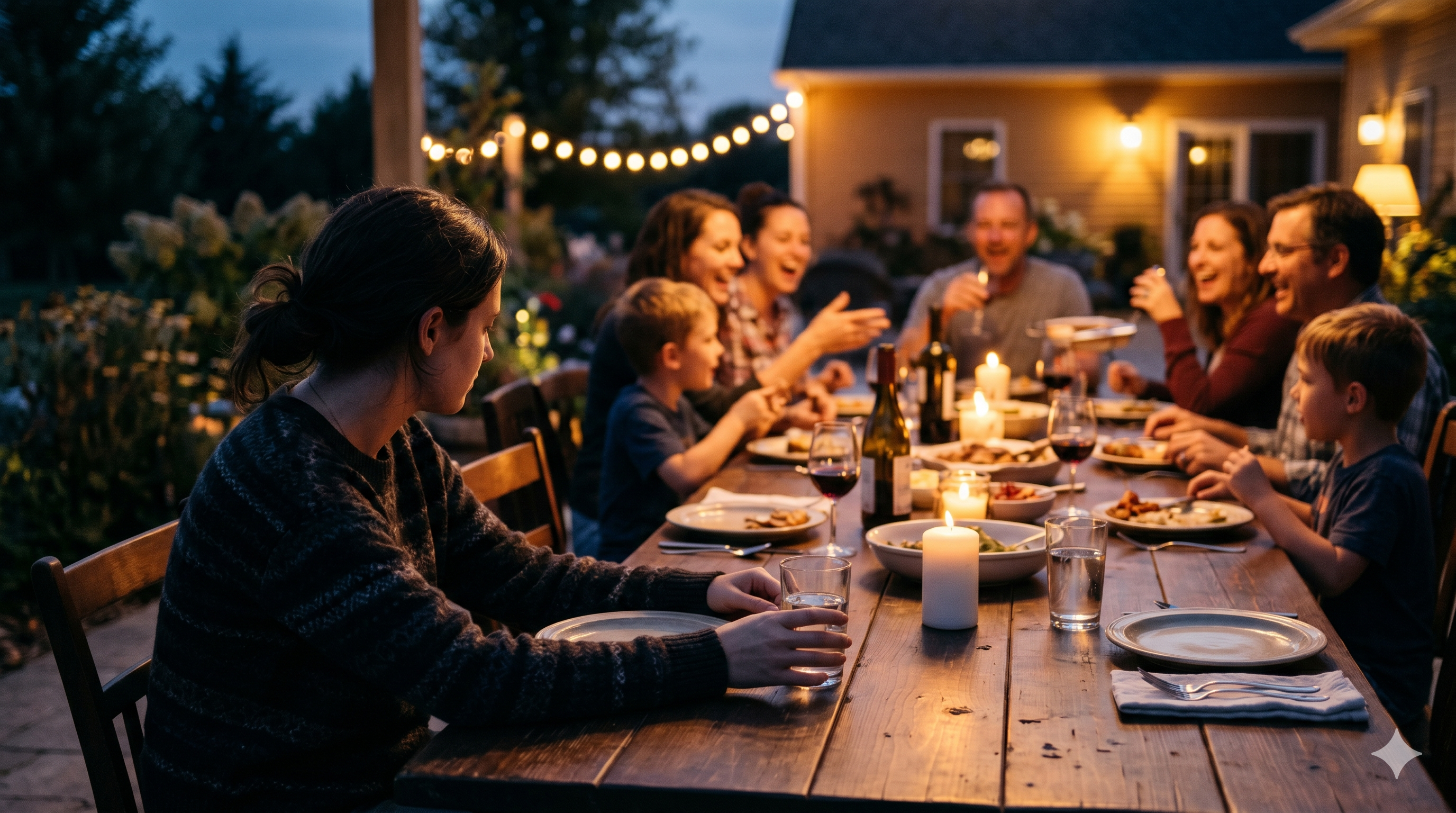
Loneliness in active addiction wasn’t about an empty room. It was about the person missing from it.
LEARNING TO LOVE OURSELVES April 24
“Alcoholism was a lonely business, even though we were surrounded by people who loved us… We were trying to find emotional security either by dominating or by being dependent upon others . . . We still vainly tried to be secure by some unhealthy sort of domination or dependence.” — AS BILL SEES IT, p. 252
When I did my personal inventory I found that I had unhealthy relationships with most people in my life — my friends and family, for example. I always felt isolated and lonely. I drank to dull emotional pain. It was through staying sober, having a good sponsor and working the Twelve Steps that I was able to build up my low self-esteem. First the Twelve Steps taught me to become my own best friend, and then, when I was able to love myself, I could reach out and love others.
There’s a specific kind of loneliness I don’t hear talked about enough, and it’s the one that happens in a crowded room.
I could be at a table with my wife, my kids, my parents, my closest friends — people who loved me, who had shown up for me, who were literally reaching across a plate of food to hand me something — and I’d feel like I was watching them from another building. Behind glass. A little too far to hear clearly.
That was the baseline. Not the exception.
If you’ve felt it, you know what I’m describing. And if you haven’t, I’m not sure I can explain it, because it doesn’t make any sense on paper. I was surrounded. I was beloved. And I was alone in a way so total I’d sometimes sneak into the bathroom just to be alone with more alone, because pretending to be present was more exhausting than admitting I wasn’t.
That’s what I drank at. That gap.
The Two Masks
Today’s Big Book line is almost surgical in how it describes what I was actually doing in every relationship: trying to buy emotional security through either domination or dependence.
I did both. It just depended on who was in front of me.
With some people, I controlled. I managed. I was the one with the answers, the one who stepped in, the one who explained. I wasn’t loving them — I was steering them, because if I could point the ship, I didn’t have to worry about where it was going. Control was cheaper than trust.
With other people, I melted. I needed their approval the way a plant needs light. I’d contort myself into whatever version of me kept them happy, then resent them quietly for a version of me I had forged and handed them.
Both looked like love from the outside. Neither one was.
And both were doing the same job underneath: keeping me safe from the one relationship I couldn’t manage — the one with myself.
Why Drinking Made Sense
If you can’t tolerate being alone with you, and you can’t fully be with anyone else, there aren’t many doors left. Drinking was the only one I could reliably open.
Alcohol turned the volume down on the part of me I didn’t want to hear. It made the crowded-room loneliness feel less like glass and more like distance — survivable distance. And for a few hours it let me perform something that almost looked like presence.
It was counterfeit, and some part of me always knew. But counterfeit connection beats no connection, which was how I understood the choice at the time.
The reflection says the author drank to dull emotional pain. I don’t have a more honest way to say what I was doing, either.
The Crack Was Slow
Here’s what I wish I could tell newcomers, even though nobody wants to hear it: the self-loathing didn’t break open in a single moment for me. There was no lightning. No sponsor sentence that shattered me clean. No Fourth Step revelation that rearranged my insides overnight.
It cracked slowly. By showing up.
I went to meetings I didn’t feel like going to. I listened to people I didn’t think had anything to teach me. I stayed sober through evenings where sobriety felt like punishment. I did the next right thing when it felt like the next pointless thing.
Somewhere in the middle of all that unglamorous repetition, something shifted. Not dramatically. I didn’t suddenly love myself. I just stopped actively loathing the guy who’d stayed sober another day. Which, as it turns out, is the first brick.
The Steps taught me to become my own best friend, like the reflection says. But nobody told me that friendship would be built the same way any other friendship is — by showing up for each other, over and over, without needing a reason.
I became my own friend by not abandoning myself every time I got uncomfortable.
Loving Other People Was Downstream of That
I couldn’t receive my family’s love when I didn’t believe I deserved to be in the room with them. I couldn’t give my kids the attention they needed when I was watching them through that pane of glass. I couldn’t really be with anyone, because I wasn’t with me.
The sequence in the reflection matters. Love yourself, then reach out. Not because it’s a rule. Because it’s physics.
You can’t pour from a cup you’re not holding. I used to try. It came out as control, or it came out as need. People could feel the difference even if they couldn’t name it.
Once I stopped evacuating myself, I was actually in the room when the people I loved sat down across from me. That was new. That is still, a dozen years in, sometimes new.
If You’re Lonely Tonight
If you’re reading this and you’re surrounded by people who love you and you still feel like you’re watching them from somewhere else, I’m not going to tell you that’s fine. It isn’t. But I will tell you it’s familiar ground, that it’s survivable, and that the way out isn’t through finding more people.
It’s through slowly, unsexily, unspectacularly showing up for the one person you’ve been trying hardest to escape.
Keep going to meetings. Work the Steps honestly. Get a sponsor, or use the one you have. If therapy belongs in your recovery, let it. Do the things that don’t feel like they’re doing anything.
You’ll be in the room one day. Not watching it. Inside it.
That’s what loving yourself quietly hands you. And once you have it, you’ll finally have something real to hand back.
If you’re rebuilding after active addiction and the in-between hours get loud, MyRecoveryPal is something I built for exactly those moments — when the room feels crowded and you still feel like the only one in it. It’s not a replacement for the program, or a sponsor, or your people. It’s just a tool I made because I needed it, and figured I wasn’t the only one.
More Recovery Tools
Free tools to support your recovery journey
Free Sobriety Calculator
Calculate clean time, milestones, money saved, and health benefits. No signup required.
Free Clean Time Calculator
Track NA clean time, key tag milestones, money saved, and recovery benefits. No signup required.
Free Sobriety Medallion Maker
Create a personalized AA-style recovery medallion. 16 styles, free forever, no signup required.
Sobriety Counter App
Track sober days with milestone alerts, daily check-ins, and community support.
Sober Grid Alternative
Free recovery social network. Connect with peers, join groups, and share your journey.
Online AA Meetings
Browse 1,500+ free online AA meetings with join links, updated weekly.
Craving SOS
Guided breathing, urge surfing, and grounding tools for craving moments. Free, no signup.
Relapse Prevention Plan
Free guided template: triggers, warning signs, coping strategies, and emergency steps.
Alcohol Recovery App
Sobriety tracking, recovery groups, AI coach, and peer support for alcohol recovery.
Comments (0)
Login to leave a comment.
No comments yet. Be the first to share your thoughts!