The thing about a prison you built yourself is that you know every brick. You know which ones you laid in anger, which in fear, which in the long stretches of just trying to get through a Tuesday. You know the mortar — you mixed it. And somewhere deep down, you know the door, too, because you’re the one who hung it. Today’s reflection is about that prison, and the strange, humbling discovery that the lock on the inside was always the one that mattered.
AA Daily Reflection
FREEDOM FROM “KING ALCOHOL” April 09
“. . . let us not suppose even for an instant that we are not under constraint. . . . Our former tyrant, King Alcohol, always stands ready again to clutch us to him. Therefore, freedom from alcohol is the great ‘must’ that has to be achieved, else we go mad or die.” — AS BILL SEES IT, p. 134
When drinking, I lived in spiritual, emotional, and sometimes, physical confinement. I had constructed my prison with bars of self-will and self-indulgence, from which I could not escape. Occasional dry spells that seemed to promise freedom would turn out to be little more than hopes of a reprieve. True escape required a willingness to follow whatever right actions were needed to turn the lock. With that willingness and action, both the lock and the bars themselves opened for me. Continued willingness and action keep me free — in a kind of extended daily probation — that need never end.
Bill calls alcohol a tyrant. King Alcohol, ready to clutch us back the second we get comfortable. I used to think that language was a little theatrical — kings and tyrants and clutching, like something out of a play. These days I read it and think it’s almost too gentle. A king at least announces himself. The thing I lived under was quieter than that. It didn’t wear a crown. It wore my own voice. It told me what I wanted, then handed me the only thing that would quiet the wanting, then charged me everything I had for the privilege.
What gets me about today’s reading is the part where the writer talks about the “occasional dry spells that seemed to promise freedom” but turned out to be reprieves, not releases. I lived in those. For years. White-knuckled stretches where I’d convince myself the worst was behind me, where the absence of a drink felt like proof of something, where I’d start quietly making plans for the version of my life that was going to begin any minute now. And then it wouldn’t begin. And I’d be back inside the same walls, blinking, wondering how I’d ended up there again when I’d been so sure I was out. The cruelest part of those reprieves is that they teach you to mistake the pause for the cure. They train you to celebrate quiet as if quiet were freedom. It isn’t. Quiet is just the guard taking a break.
Real freedom — the kind today’s reflection is pointing at — turned out to be something stranger than I’d expected. It wasn’t a moment. It wasn’t a dramatic breaking-out. It was the slow, almost boring discovery that the cell door had a handle on my side, and that I’d been the one holding it shut. Not on purpose, exactly. But not by accident either. I’d been holding it shut because letting go required something I didn’t yet have the willingness for. And willingness, it turns out, is the whole ballgame. The steps don’t ask you to be brave. They don’t ask you to be fixed. They ask you to be willing. That’s it. That’s the key. And the brutal grace of it is that nobody can hand you willingness — you have to find it in yourself, usually right after you’ve run out of every other option.
The phrase the reflection ends on — “extended daily probation that need never end” — is the one I keep turning over this morning. Probation isn’t a word people love. It implies you’re not fully trusted yet. It implies the freedom is conditional, that someone’s still watching, that you haven’t quite earned the full pardon. And the honest truth is: yeah. That’s exactly right. I’m not pardoned. I’m paroled. The freedom I have is real, but it’s not unconditional, and the moment I start treating it like it is, I start drifting back toward the building I just walked out of. Some people in the rooms talk about this as a daily reprieve, and I think that’s the most accurate language we have. It’s not a finish line you cross. It’s a door you walk through, and then walk through again tomorrow, and the day after that, and the day after that. Forever. And here’s the part that took me a long time to understand: that’s not a punishment. That’s the gift.
Because the alternative — the version where you “graduate,” where you get to stop paying attention, where freedom becomes something you own instead of something you practice — is the version where the tyrant gets back in. Every time. Without exception. The people I’ve watched go back out almost always went back the same way: slowly, then all at once, after a long quiet stretch where they decided they didn’t have to keep doing the small daily things anymore. The freedom convinced them they were free. And the moment they stopped working the lock, the lock worked them.
So the daily probation isn’t the cost of freedom. It is the freedom. The willingness to keep showing up, to keep doing the small unglamorous things, to keep noticing when the old voice starts dressing itself up in new clothes — that’s the whole structure that holds the door open. Take it away and the door swings shut on its own. It doesn’t even need help.
What I’ve come to believe, after some years of this, is that I’m not trying to escape my prison anymore. I escaped it. That part is done. What I’m doing now is something more interesting and a lot more sustainable. I’m learning to live like a person who knows where the cell is, who can see it from the road, who doesn’t pretend it isn’t there — and who chooses, every single morning, to walk in a different direction. Some mornings the choice is easy. Some mornings it’s the hardest thing I do all day. But it’s always a choice. And the fact that it’s still a choice, after all this time, doesn’t scare me the way it used to. It actually steadies me. Because as long as it’s a choice, I’m awake. And as long as I’m awake, I’m free.
King Alcohol is still out there. I don’t pretend otherwise. He hasn’t gotten weaker — I’ve just gotten more honest about who he is and what he wants. And these days, when I feel him standing at the edge of things, ready to clutch, I don’t try to argue with him. I don’t try to outsmart him. I just do the next small right thing, and then the next one, and then the next one. That’s the whole program some days. That’s the whole freedom.
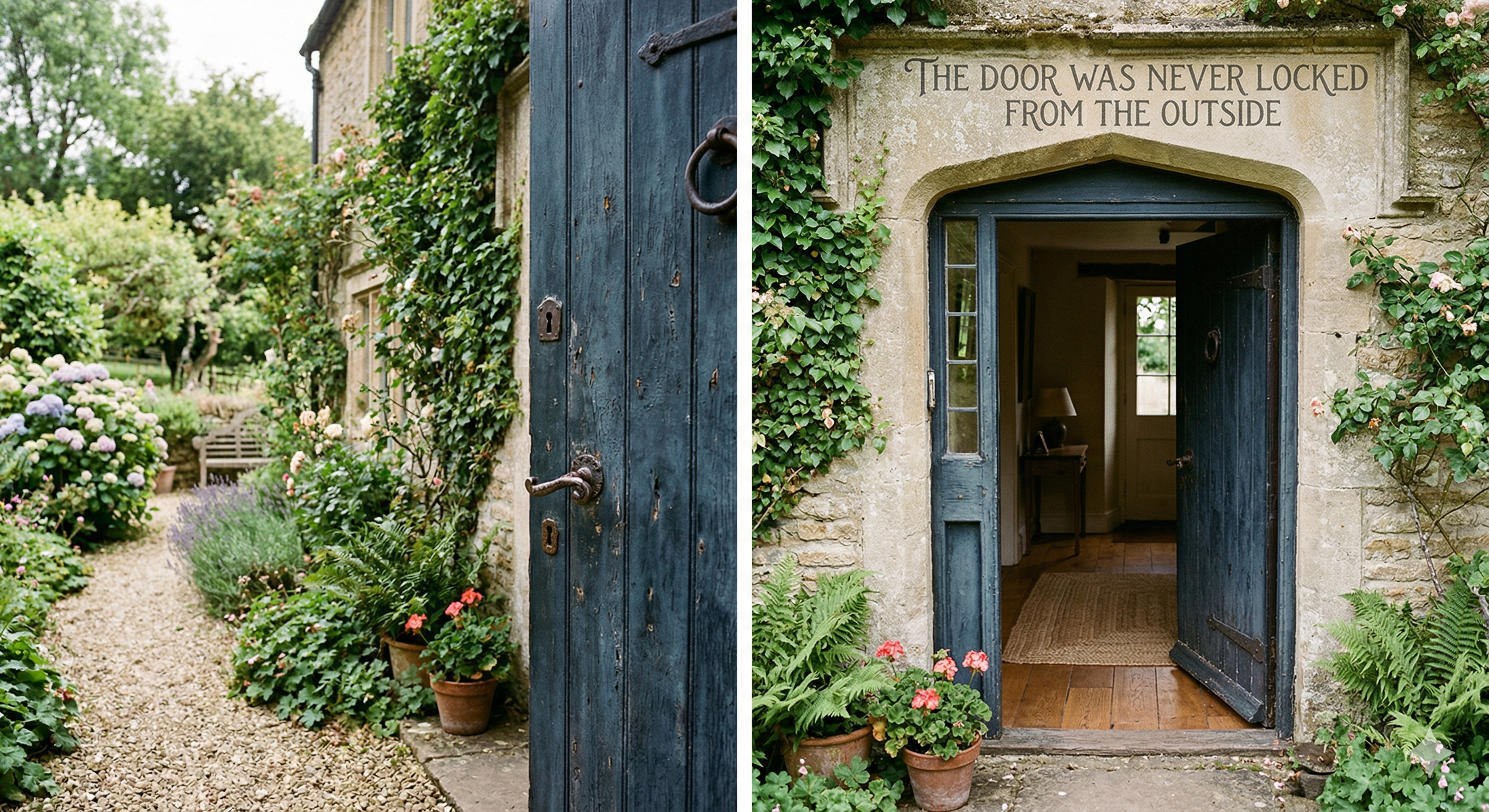
The door isn’t locked from the outside. It never was. And the same hand that used to hold it shut is the one that gets to open it now, one day at a time, for as long as I’m given.
If any of this is sitting with you, two things from my own work that might help. There’s a recovery journal I put together on Amazon — a quiet daily place to do the small honest work this kind of freedom asks for. And MyRecoveryPal is something I built for the in-between moments, when the meetings are hours away and you need a steadier place to put your hands. Neither one is the program. They’re just things that have helped me keep walking through the door.
Comments (0)
Login to leave a comment.
No comments yet. Be the first to share your thoughts!